
An Ever Greener Gallery
Some thoughts on an even greener gallery…
Considerations when running a gallery are similar to home – Avoiding single use plastics and any materials that can’t be recycled, re-used or repaired. Being energy efficient. Making our gardens a haven for pollinators and other wildlife.
The Gallery artists work in many different ways and with a wide variety of materials such as wood, metal, clay, canvas, glass and textiles. Sometimes they re-use and recycle found materials to create something new and unique. You can read more about some amazing things they have created and the way they work by following the link to their blogs.
For some time we’ve been trying to make sure all wrappings are “green” and the Gallery uses green biodegradable bubble wrap and paper bags, which are sourced locally. We’ve also had our own fabric tote bags printed locally. Most greetings cards and prints in the browser have a protective cover, as we don’t want artwork to get damaged or dirty. Some are now packaged in green compostable cellulose sleeves.
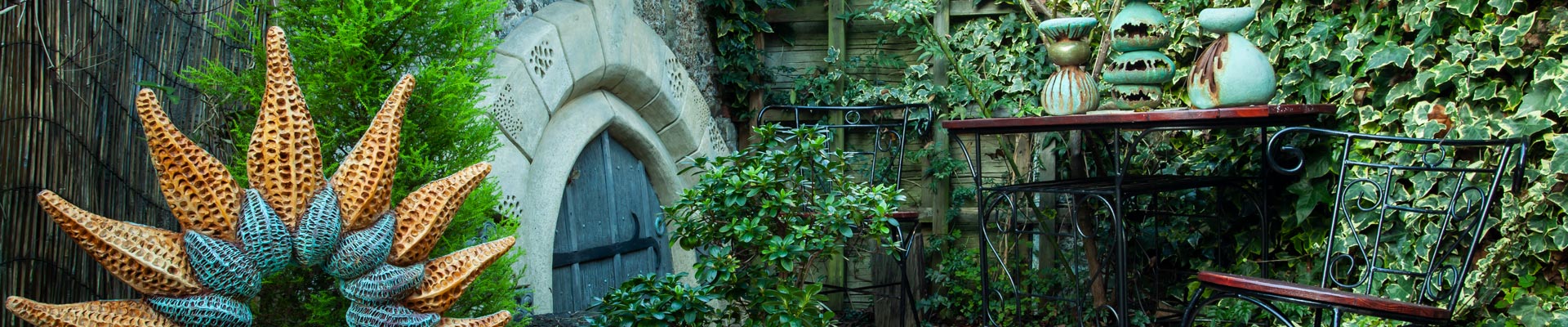
It is really great that there is a little garden at the gallery with many flowering plants growing amongst the artwork to encourage pollinators and various insects. This adds some magic to the sculpture garden and also shows that even in a small space there can be some exciting wildlife, even if just on a miniature scale. The gallery garden can be an inspiration to anyone who visits.
LED lighting illuminates all the artwork in the gallery and garden, we also make sure we use environmentally friendly products for that all-important cleaning!
Shopping local encourages a strong local economy and if as many people as possible can walk, cycle or use public transport to visit the gallery that will help the environment and our health too.
There are quite a lot of ways that we can still all make a few small changes, which will lead to an even greener gallery in 2022.
Martin Sculpture – On being greener
We have given up our van and are now sharing a vehicle with another local business for deliveries. You would be surprised how many sculptures I can get in the panniers and basket of my bike at times, and we have chosen the closest gallery possible to our house as our main outlet.
Over 40 years experience of installing sculptures in the landscape has revealed to us how quickly wildlife naturally takes ownership of sculptural forms. Hollow internal spaces become homes for millions of insects, worms and perches for birds. The forms can punctuate the landscape like individualised rocks.
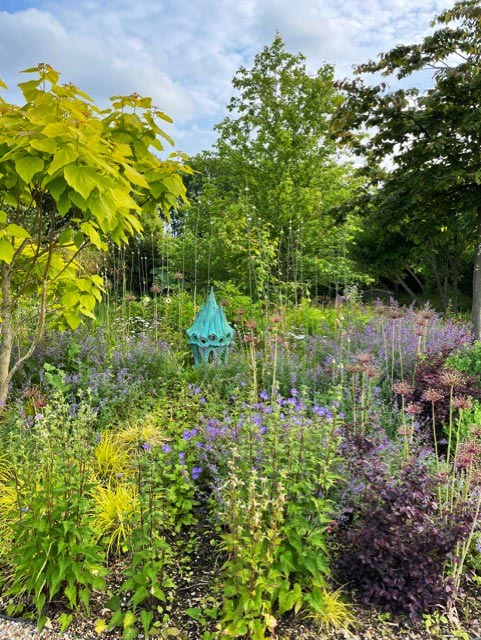
The materials we use are often reconstituted by-products of cutting processes; e.g. marble dust and iron filings. Left long enough uncleaned they grow the natural lichen of the land they stand in as most rocks would.
We use cold casting processes which don’t need heat energy, and have re-used the same armatures and clay in the modeling stage of the sculpture for the last 40 years, saving very many vehicular journeys transporting heavy clay.
We do our own casting, working from home, saving commuting emissions, and we recycle and reuse containers for materials wherever possible.
Once made, the moulds can often be filled with different substances, so customers can choose sculptures made of less durable materials if preferred.

Over the decades of sculpture courses run, students have often sculpted with recycled materials, or things locally to hand. We often rebuild sculptures from previous projects, recycling armatures and materials.
“Sanctuary” is designed with elements of form that I know will appeal to various species but I’m fully prepared to be surprised about its final residents and visiting creatures.
Since I started consciously making Sculpture in 1979 I’ve been interested in the way creatures around me use the forms I produce. Sculpting feels primarily a means of communicating ideas and observations in materials and processes for the human species. But the way that animals and birds explore and adapt forms in the environment is a constant source of entertainment and wonder.

Karolyn Mnich – Trying to be Green as an Artist
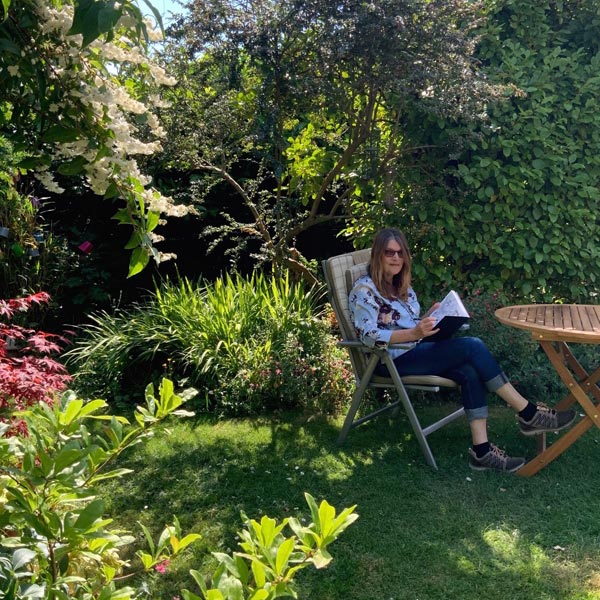
I’d always felt I was leading a “green” lifestyle, aware of the environment and the planet’s resources, even some of my earliest work as an art student in the 70’s was screen-printing posters for the local Friends of the Earth group, but I’ve realised over the years that there is a lot to consider to become green as an artist.
Much of my subject matter relates to the natural environment and I’ve continually made changes to try and become greener both in the materials I use and where they come from. In my own practice as a printmaker I mainly use lino, wood, various inks and mediums and different types of papers.

Most of my tools and equipment that I bought 30 or more years ago I’m still using, which shows that it is worth investing in good quality items and if anything wears out it can still be repaired.
Wood and traditional lino are natural materials (lino is made from linseed oil, cork, pine resins and wood flour with a jute hessian backing) however “easy cut lino” and vinyl blocks aren’t, so these are important considerations when choosing what blocks to use. Also what happens to any “left-overs”? I use any offcuts of paper in collage and small pieces of lino get used creatively too.
Oil based printing inks although great to work with need cleaning afterwards. I’m really glad that manufacturers have now produced safe and environmentally friendly products that are good quality and great to use. I also like to support some old companies In the U.K. who make excellent papers, inks, blocks and other art materials and I try to buy anything I need from suppliers in Sussex.
After my artwork has been created I get things framed by a local framer using archival boards and wooden frames with glass and not acrylic.

I’ve changed to using green compostable cellulose sleeves for my greetings cards. I wouldn’t want artwork in the browser to get damaged or dirty so feel it’s still important for them to have a protective sleeve, but it’s great that there are green alternatives for most things now.
I’m also very fortunate to be part of Shoreham Art Gallery close to where I live and work as an artist.
Sue Jones – Denim and wool, spares and scraps mean Textile Thrift!
Recently, I heard the term ‘textile thrift’ and thought yes, that is what I do. What a great phrase.
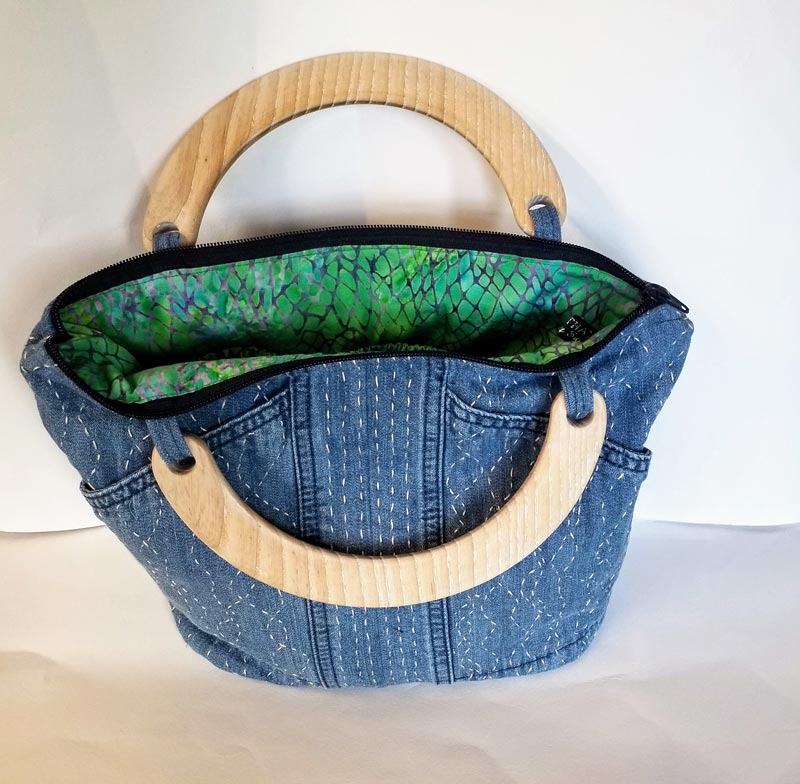
Using pre-loved jeans to make new bags is a long-held love because denim takes on such different tones with use. And a hole in the jeans just gives me an exciting challenge. This bag was made over three years ago and is still in constant use.
A friend donated a waistcoat she no longer wanted so after machine embroidering the three cats the waistcoat was made into a bag, which went to a new home within hours of finishing it.
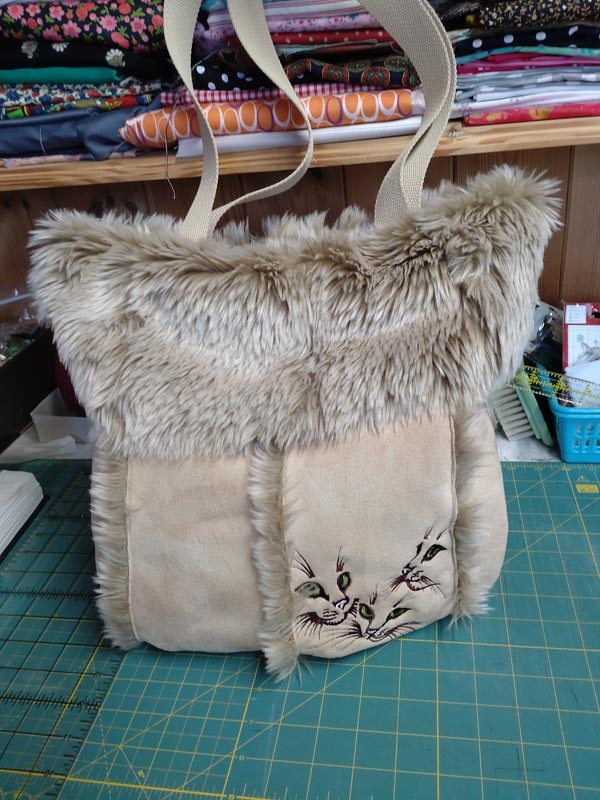
Nothing makes me happier than when I am offered a jumper that has turned to felt because it has been washed on a high temperature. I have to admit that I eye up friends’ and relatives’ jumpers and wonder how long before I might get them! Another friend makes clothes and gives me the pieces left over when she has finished cutting out. I love incorporating these pieces into my work.
So my New Year’s resolution is to continue to reuse material as much as possible to save it going to landfill sites and so practice textile thrift.
Bebe Bird – Pottery Ditty
Pots have been made for thousands of years, long before the industrial revolution. When asked to write something in response to how we are becoming green my immediate thoughts were ‘I’ll have to make less’!

My pottery involves using water, electricity and many naturally sourced materials extracted from the ground. I like to think my kiln is powered sustainably; my provider assures me that they are the ‘greenest’ of the big six. I am happy that I am not burning wood, oil or gas.
For many years I have been conscious of my waste. Broken pots go into hardcore, (not to be confused with Roman remains) and most clay scrapings are damped down and used again. Anything washed down my sink is captured in a tank beneath my sink and distributed around my garden.
Long may I not feel guilty of making pots and giving you the pleasure of using them.
Terry Guile – Rings and other things
We are all becoming aware of the situation of climate change. At Shoreham Gallery we try to make a difference and are aware that we all need to participate.
We buy paper bags locally and collect from the supplier so there are few road miles. For wrapping delicate items we use a green biodegradable version of bubble wrap, which is also lighter than the previous product.

With any waste silver I can make small items such as earrings and rings. I try to use as much as possible and it does not detract from the finished piece. I then have it hallmarked in the normal manner. I know where my stones come from and are ethically sourced. This also helps the local economy. As we all know, without our help, small village communities would not survive.
Anna Cates – Green Woodturning
The word “green” in woodworking can have two meanings. Firstly, the practice of using freshly felled or “green” timber and secondly, being environmentally conscious in all aspects of your work. I think it’s fair to say that I’m a green woodturner. For starters I only have to walk a few steps to my workshop so no petrol is burnt before my lathe starts spinning!
The most frequently asked question put to me is:” Where do you get your wood from”? I do occasionally buy boards from sawmills around Sussex but a large part of my work is created from locally sourced trees, many of which would have just rotted in the back of someone’s garden or been split into fire wood. The most interesting grain and shapes can be found inside discarded logs.
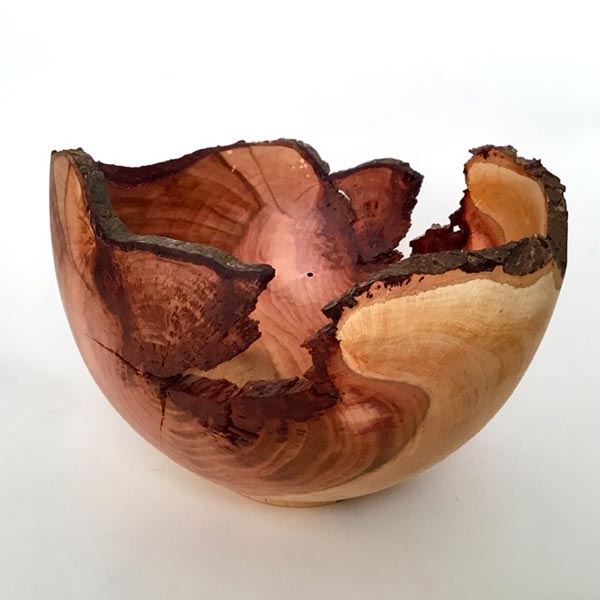
Tree-surgeons and friends regularly let me know if they see something I might like. I tend to turn freshly felled pieces “green” or “unseasoned” as that helps to relieve stresses as the wood dries and I can then finish-turn the piece a few months later.
Re-using and reclaiming is another wonderful way of sourcing unusual timbers. Reclaimed sea-defences or old lock-gate timber as in the lamp and bowl below are nice examples, you just have to spot the potential within!
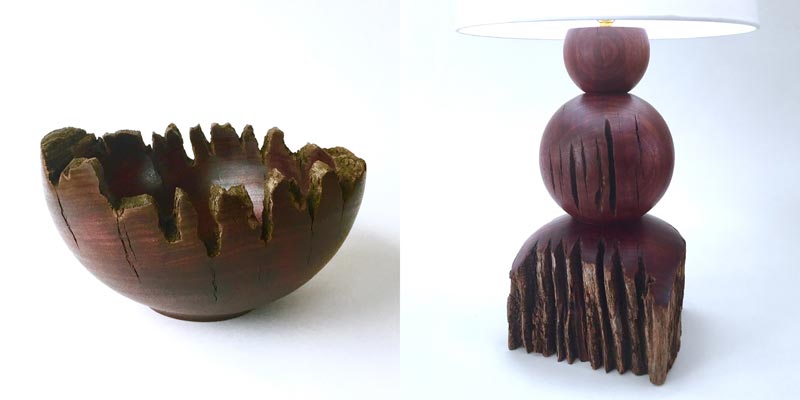
Short leftover pieces of all different colours of planed up timber can be used together effectively to make stripy bowls. Although I love the intense purple colour of Purpleheart, I choose only to use it if I can get my hands on some reclaimed material, as in this old flooring:

Woodturners create an awful lot of sawdust and although it offers some convenient chock resistance when things are dropped on the floor it’s advisable to occasionally sweep up! I regularly take bags and bags of the stuff up to our local allotments where it gets used to make compost. To see fruit and veg grow out what’s essentially a waste product is very satisfying.

Other small choices that I make (which all add up) is using environmentally friendly finishing products such as Osmo Oil. For packaging I now use green bio-degradable bubble wrap and recycled brown paper bags.
I’ll wrap things up with an image of my latest Pebbles Lamp which is in part made from pieces of timber salvaged from the off-cut pile at a local furniture workshop. On the right are some Yew logs that I‘m planning on turning into lamps for the gallery this spring.
If you have a tree in your garden that you’d like something turned from, please get in touch and I’ll be happy to discuss your own green project!